Energy forecasts that survive the hard questions
Who we are
Woodbine Economics is an independent energy forecasting firm covering energy economics, including liquid and renewable fuels.
We publish transparent recurring outlooks that fit into our clients’ workflows and give them the power and visibility to challenge assumptions.
Why we started Woodbine Economics
Most research and analysis can't survive a hard question. The logic behind the number isn't visible, the regions don't reconcile, and the analyst who is supposed to explain it isn't reachable.
We know because we bought it. We’ve also been the ones asked to defend the number in front of engineers who know plant constraints better than any model, economics and strategy teams running their own figures against ours, and C-suite executives deciding where the capital goes.
So we built Woodbine the other way. Every number traces to a documented assumption. Every model is built by an analyst that clients can call. Every year we publish a retrospective that separates what the model got right and where our assumptions moved, so clients can see which drivers actually mattered.

Who we serve
Refiners weighing investment and rationalization in the 2030s
Renewable fuel producers assessing a project against future margins and feedstock supply
Petchem manufacturers needing to understand whether the market is over- or undersupplied
Investors conducting diligence on energy asset investments
What they have in common: someone is going to ask where the number came from
Our offerings
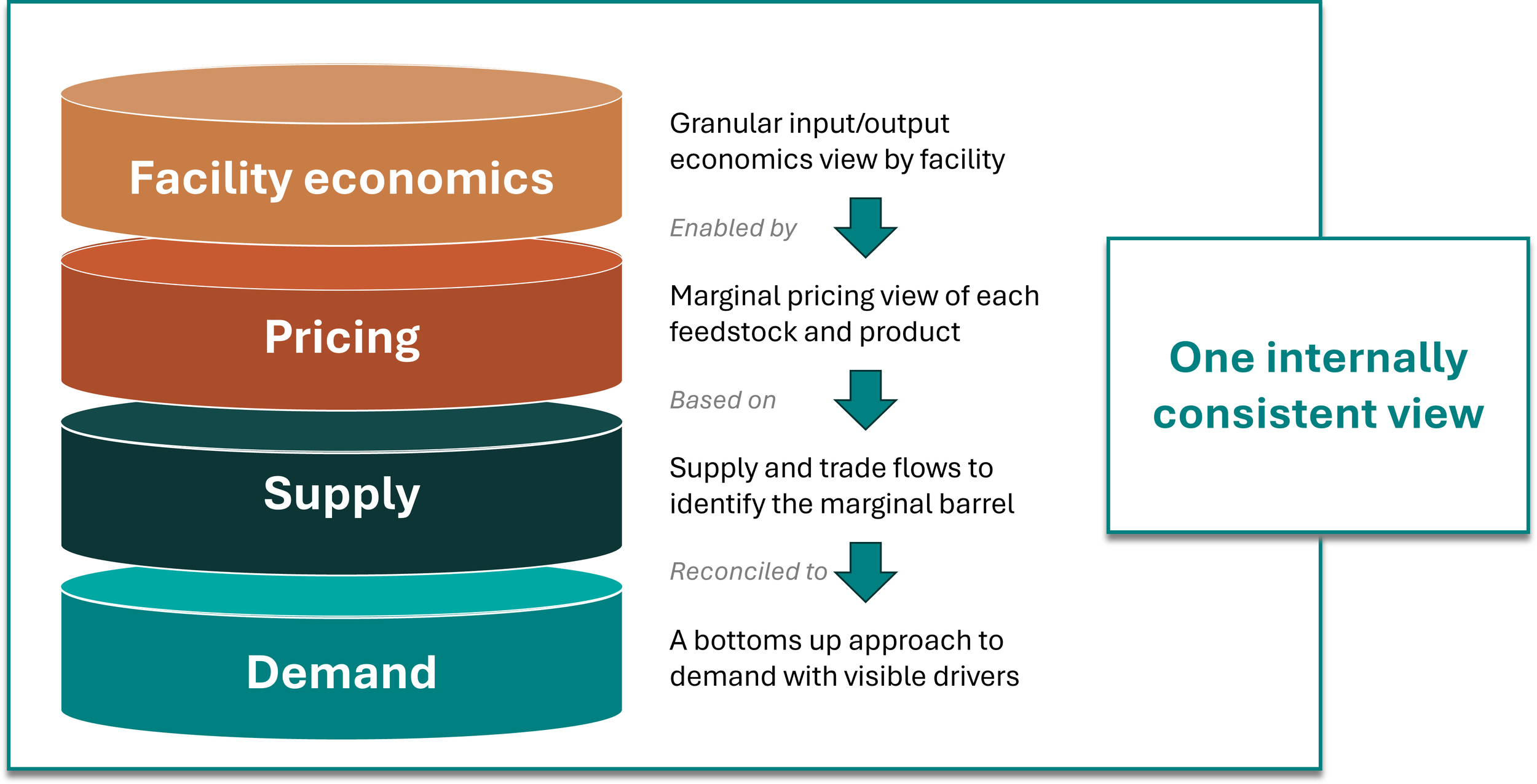
Across these sectors, our market outlooks and scenario analyses connect four critical areas, with global, regional, and country-level detail:
Demand: Bottoms-up build of demand across key energy commodities with clearly mapped drivers for each product (e.g. VMT, electrification, ton-miles, passenger-miles)
Supply: Supply volumes balanced to demand, identifying the marginal barrel across production and trade
Pricing: Price sets for crude, products, renewable fuels and feedstocks built from the price setting mechanisms identified in our supply/demand view
Facility economics: Assessments of facility level margins and competitiveness based on the unique factors (e.g. crude slates, yields, logistics) that shape each asset’s performance